Research on artificial intelligence and robotics has long been structured by questions of autonomy, cognition, and embodiment. Whether in engineering, cognitive science, or philosophy of mind, the dominant concern has been how machines can perceive, act, and interact within their environments. This article argues that such perspectives are no longer sufficient to account for the contemporary transformations associated with intelligent technologies. The central claim advanced here is that the key issue is not machine autonomy but social incorporation. Robots and AI systems become socially significant not because they increasingly resemble humans, but because they are progressively integrated into networks of practices, institutions, and forms of life that incorporate them into collective action. Contemporary robotization should therefore be understood less as a technological evolution than as a reconfiguration of social regimes of delegation. Drawing on socio-semiotics and Science and Technology Studies (STS), the article develops a theoretical framework that distinguishes three interconnected forms of delegation: operational delegation, cognitive delegation, and decision-making delegation. Through these processes, intelligent technologies increasingly participate in the production of action, interpretation, evaluation, and choice. As a result, agency and responsibility become distributed across complex assemblages involving humans, algorithms, sensors, infrastructures, and organizations. The article further examines contemporary warfare as the most visible and radical manifestation of these dynamics. Autonomous drones, AI-assisted targeting systems, and automated command platforms reveal how mechanisms of delegation extend beyond technical assistance and increasingly shape processes of identification, classification, and decision-making. Far from being confined to the military sphere, these transformations illuminate broader changes affecting healthcare, logistics, security, and everyday life. Building on these observations, the article proposes the foundations of a geosemiotics of robotization, understood as an analytical framework capable of articulating sociotechnical imaginaries, social practices, infrastructures, and geopolitical power relations. From this perspective, the fundamental challenge posed by intelligent technologies in the twenty-first century is not the replacement of humans by machines, but the ongoing reconfiguration of action, decision-making, and responsibility within hybrid collectives composed of human and nonhuman actors.
Social robots were initially designed within frameworks of assistance, accompaniment, and relational support, particularly in contexts of ageing, care, and social isolation. Yet their diffusion has been accompanied by recurring concerns regarding loss of control, dehumanization of social relations, emotional dependency, human replacement, and the artificialization of care practices. Drawing on an analysis of media discourses devoted to social robots, this article proposes to shift the conventional question of technological acceptability toward an anthropology of contemporary relational imaginaries. The central hypothesis advanced here is that controversies surrounding social robots do not merely reveal resistance to technological innovation; rather, they make visible a deeper crisis affecting social bonds, care infrastructures, and forms of human presence. Media representations thus emerge as privileged sites of symbolic production where the boundaries between human and non-human, assistance and substitution, relationship and simulation are continuously negotiated. The article argues that the acceptability of social robots cannot be reduced to functional evaluation alone but must instead be understood as a cultural and anthropological construction of technical alterity and human–machine relations.
Social robots constitute a significant component of therapeutic mediation tools used with children diagnosed with autism spectrum disorder (ASD). Predominantly anthropomorphic, these robots are designed to facilitate interaction by relying on the simplicity of their expressive modalities, achieved through simplified and predictable behaviors. Their interactional simplicity makes them particularly valuable tools for healthcare professionals. Numerous studies highlight their potential benefits in supporting joint attention, imitation, and emotion recognition. Are anthropomorphic robots, however, truly an adequate means of addressing children’s difficulties? In this article, we show that although the anthropomorphic approach currently dominates the field, it presents several limitations that must be addressed. These limitations concern the cost and accessibility of such devices, their acceptability among children and professionals, their limited adaptability to the situated practices of care, as well as the additional technological workload they impose on caregivers. Drawing on an examination of social robotics applied to autism and its limitations, this article proposes to broaden the scope of inquiry by considering a conception of the social that is not restricted to face-to-face interaction but instead encompasses its multiple dimensions. As with any technical object, the design of mediation robots is shaped by networks of human, institutional, and symbolic relations that determine their uses and their effects. Based on a review of the main existing devices and on fieldwork conducted with healthcare professionals, we identify two principal models of mediation. We argue that these models do not always align with care practices and with the situated forms of knowledge on which such practices rely. We propose to explore a complementary pathway in mediation robotics. This approach is being developed within the framework of the Médiations Robotiques en Soins de Santé (MR2S) project. It is grounded in the design of non-anthropomorphic, softer, simpler, and cheaper technical devices that build upon the experience of healthcare professionals. Our approach pays particular attention to an aspect that remains relatively unexplored in social robotics applied to autism: sensoriality. The purpose of the project is to design robotic objects capable of enriching the therapeutic relationship while being sustainably integrated into existing care practices.
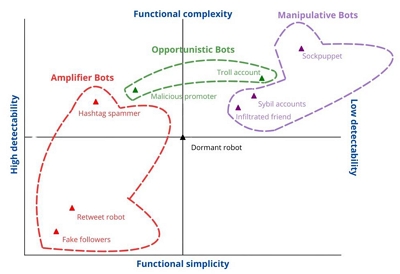
This article examines how social robots, or “bots,” have transformed online interactions and information manipulation, particularly on the platform X (formerly Twitter). It retraces their socio-historical evolution—from early chatbots like ELIZA to AI-driven agents capable of realistic human mimicry. Drawing on the Beelzebot research project, the paper proposes a classification of “malicious” bots according to their technical sophistication, intentionality, and interaction strategies. These bots amplify, polarize, and distort public debate through mechanisms such as astroturfing, fake engagement, and echo-chamber exploitation. The integration of generative AI has produced a new generation of adaptive, persuasive “AI bots” blurring human-machine boundaries. The article highlights how these entities shape information flows, foster disinformation, and undermine trust in institutions. It argues for a socio-technical “archaeology” of bots to understand their evolving power in digital public spaces. Finally, it calls for new multidisciplinary tools—technical, educational, and regulatory—to preserve the authenticity of social interaction and democratic deliberation in the AI era.
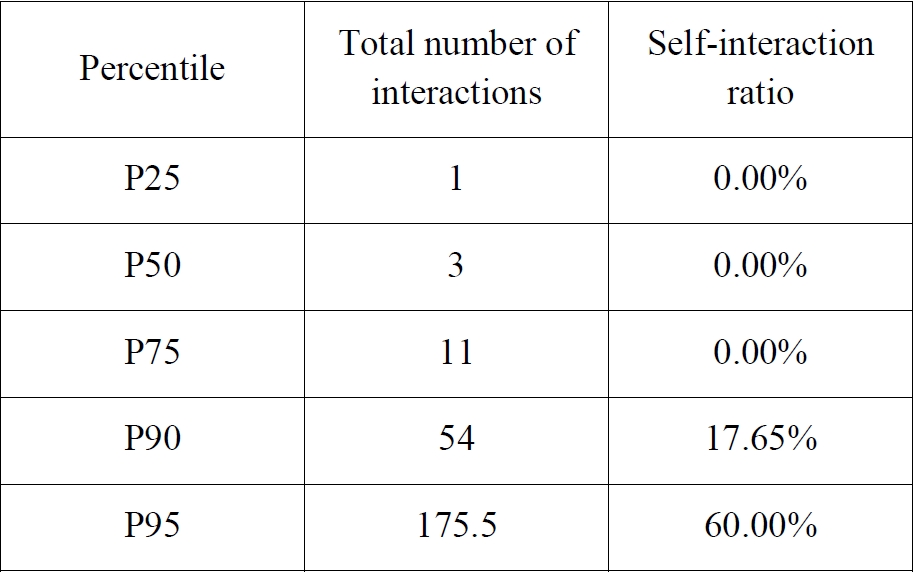
Our study proposes a socio-relational approach intended to inform the training of an artificial intelligence system for botnet detection. First, a corpus of accounts likely to be automated was assembled using individual criteria defined by the Beelzebot team (Brachotte et al.). These accounts were then analysed through their interaction dynamics in order to identify relational configurations that could serve as relevant signals for automated detection. The article presents a socio-relational analysis based on a three-step protocol: (1) identifying forms of self-interaction; (2) examining internal interactions among suspected accounts; and (3) analysing their external interactions with third-party actors. Conducted within the framework of the ANR Beelzebot project, which aims to develop the first French-language solution capable of detecting information manipulation strategies deployed by automated networks in the French-speaking X-sphere, this research constitutes an exploratory phase designed to calibrate the data-preparation methodologies required for training an AI model that integrates socio-relational indicators. In addition to producing a quantitative score, our model aims to provide a complementary qualitative output that offers insight into the characteristics of the botnet and the functional roles occupied by different bot profiles within the network. From an ethical standpoint, this approach contributes to the development of a more explainable AI model.


 First
First Prev
Prev