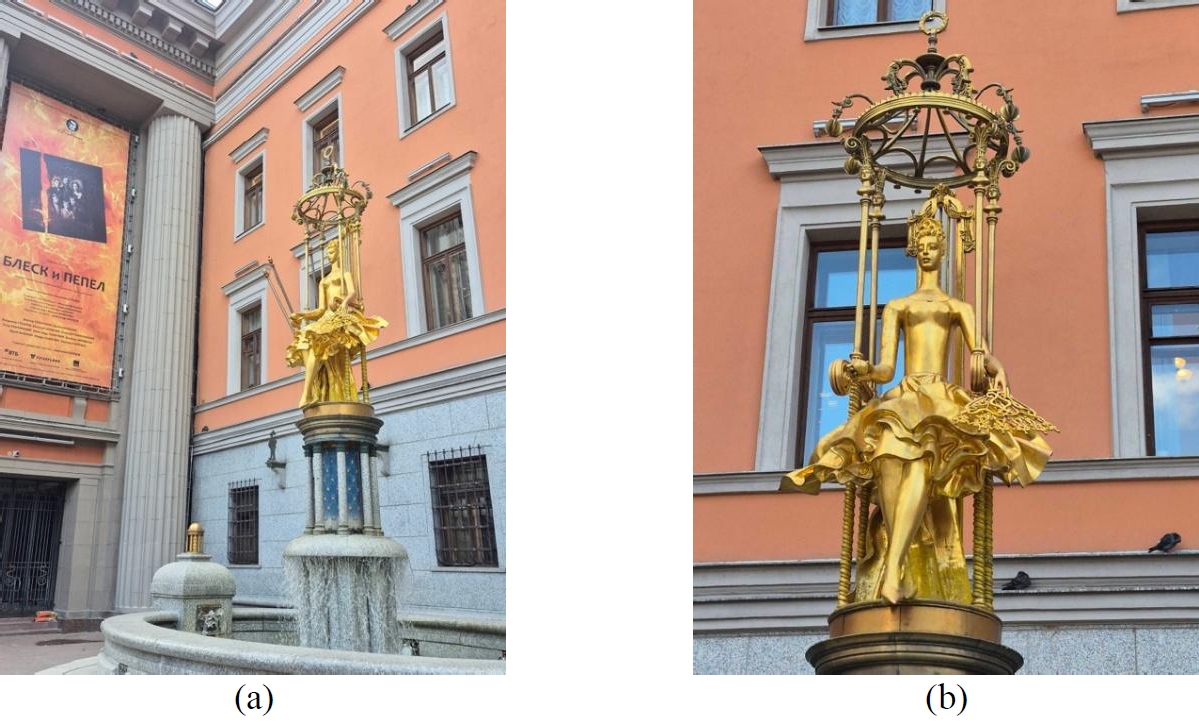
Modern semiotics pays particular attention to the concept of enunciation, particularly markers of subjectivity and polyphonic discourse. The view of enunciation as an act or process has become a central concern of the Paris Semiotic School in recent decades, with the introduction of the categories of "instances of enunciation" (Coquet 1984). The connection between the phenomenon of polyphony and the enunciation in literary texts was noted by Mikhail Bakhtin (1963) and Oswald Ducrot (1984). However, the problem of expressing polyphonic utterances in theatrical contexts remains understudied. Theatrical semiotics represents a special area of the sign world. In theater, "everything is semiotics," from makeup to the stage and the ritualized theatrical atmosphere (Lotman 1989). We propose analyzing theatrical enunciation through the lens of the concept of truth, using the example of the Vakhtangov Theatre's production of Princess Turandot.
This research focuses on meaning-making discourses developed by Master’s 2 students within private higher education institutions. Based on a qualitative approach grounded in semi-structured interviews and reflexive fieldwork, the study analyses how university communication devices contribute to the production and narration of student trajectories. The findings highlight a strong capacity among students to articulate their aspirations, doubts and professional projects. Far from being the spontaneous expression of individual interiority, these discourses also appear as the product of institutional frameworks that encourage reflexivity and self-presentation. Drawing on the works of Erving Goffman, Pascal Lardellier and Hartmut Rosa, the article shows how pedagogical interactions, academic rituals and support mechanisms contribute to the construction of meaning in student trajectories. This reflection leads to questioning the limits of institutionalised reflexivity and to emphasising the importance of the mediation of interactions and relational resonance in renewing social ties within higher education.
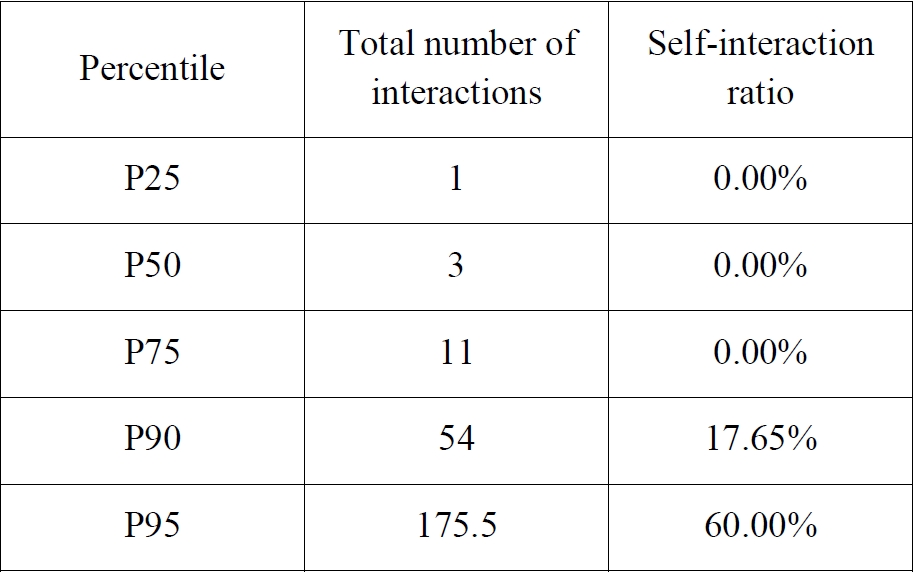
Our study proposes a socio-relational approach intended to inform the training of an artificial intelligence system for botnet detection. First, a corpus of accounts likely to be automated was assembled using individual criteria defined by the Beelzebot team (Brachotte et al.). These accounts were then analysed through their interaction dynamics in order to identify relational configurations that could serve as relevant signals for automated detection. The article presents a socio-relational analysis based on a three-step protocol: (1) identifying forms of self-interaction; (2) examining internal interactions among suspected accounts; and (3) analysing their external interactions with third-party actors. Conducted within the framework of the ANR Beelzebot project, which aims to develop the first French-language solution capable of detecting information manipulation strategies deployed by automated networks in the French-speaking X-sphere, this research constitutes an exploratory phase designed to calibrate the data-preparation methodologies required for training an AI model that integrates socio-relational indicators. In addition to producing a quantitative score, our model aims to provide a complementary qualitative output that offers insight into the characteristics of the botnet and the functional roles occupied by different bot profiles within the network. From an ethical standpoint, this approach contributes to the development of a more explainable AI model.


 First
First Prev
Prev