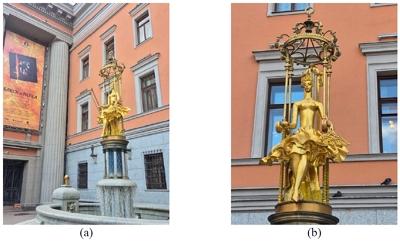
Modern semiotics pays particular attention to the concept of enunciation, particularly markers of subjectivity and polyphonic discourse. The view of enunciation as an act or process has become a central concern of the Paris Semiotic School in recent decades, with the introduction of the categories of "instances of enunciation" (Coquet 1984). The connection between the phenomenon of polyphony and the enunciation in literary texts was noted by Mikhail Bakhtin (1963) and Oswald Ducrot (1984). However, the problem of expressing polyphonic utterances in theatrical contexts remains understudied. Theatrical semiotics represents a special area of the sign world. In theater, "everything is semiotics," from makeup to the stage and the ritualized theatrical atmosphere (Lotman 1989). We propose analyzing theatrical enunciation through the lens of the concept of truth, using the example of the Vakhtangov Theatre's production of Princess Turandot.


 First
First Prev
Prev