

• Contact us
  • E-Submission
ABOUT
BROWSE ARTICLES
EDITORIAL POLICY
FOR CONTRIBUTORS

Page Path

7
results for

"AI"

Filter

Article category

Keywords

Publication year

Authors

Funded articles

"AI"

Articles
Towards a Socio-Relational Detection of Bots: Integrating Interaction Dynamics into AI Model Training
Gilles Brachotte, Thuy Duong Dang
EPISTÉMÈ 2025;36:26-45.   Published online December 31, 2025
DOI: https://doi.org/10.38119/cacs.2025.36.2
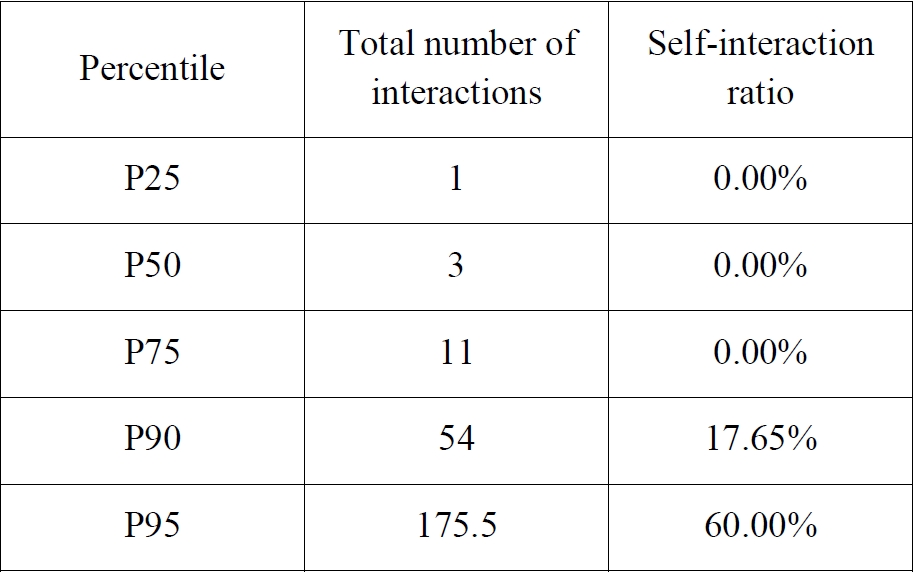
Our study proposes a socio-relational approach intended to inform the training of an artificial intelligence system for botnet detection. First, a corpus of accounts likely to be automated was assembled using individual criteria defined by the Beelzebot team (Brachotte et al.). These accounts were then analysed through their interaction dynamics in order to identify relational configurations that could serve as relevant signals for automated detection. The article presents a socio-relational analysis based on a three-step protocol: (1) identifying forms of self-interaction; (2) examining internal interactions among suspected accounts; and (3) analysing their external interactions with third-party actors. Conducted within the framework of the ANR Beelzebot project, which aims to develop the first French-language solution capable of detecting information manipulation strategies deployed by automated networks in the French-speaking X-sphere, this research constitutes an exploratory phase designed to calibrate the data-preparation methodologies required for training an AI model that integrates socio-relational indicators. In addition to producing a quantitative score, our model aims to provide a complementary qualitative output that offers insight into the characteristics of the botnet and the functional roles occupied by different bot profiles within the network. From an ethical standpoint, this approach contributes to the development of a more explainable AI model.
  • 165 View
  • 14 Download
Generative AI confronts semiotics with a new kind of sign-producing machine that actively reshapes the production and interpretation of visual content. Addressing the lack of humanities-based transdisciplinary research on this transformation, this study aims to establish a methodological foundation for the semiotic analysis of multimodal AI. By combining visual, social, quantitative, and multimodal semiotics, the paper proposes an integrated micro–meso–macro framework for evaluating AI-generated images. The analysis moves from the micro-level examination of plastic features and text-to-image translation, through the meso-level of enunciation, narrativity, and causality, to the macro-level of social stereotypes, ideology, creativity, rhetoric, truth, and inference. This is supported by a case study on lonely death and a semiotic explanation of latent space.
  • 140 View
  • 13 Download
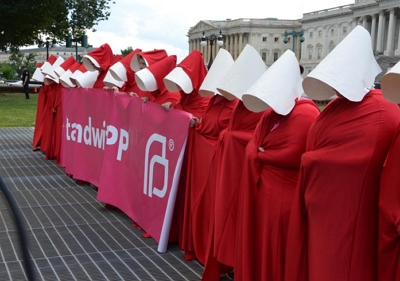
This paper explores the semiotic significance of attire in Hulu's series The Handmaid’s Tale, examining how clothing functions as a tool of power and control within the series. It further investigates the role of uniforms in contemporary society and draws parallels between modern fashion practices and subtle forms of repression and power exerted over women. By analyzing the interplay between fashion, power, and gender, this study aims to highlight the enduring impact of clothing as a medium of socio-political expression and control.
  • 483 View
  • 12 Download
The Advent of AI Civilization and Calling for a New Conception of the Human
Mun Cho Kim
EPISTÉMÈ 2025;33:5.   Published online March 31, 2025
DOI: https://doi.org/10.38119/cacs.2025.33.5

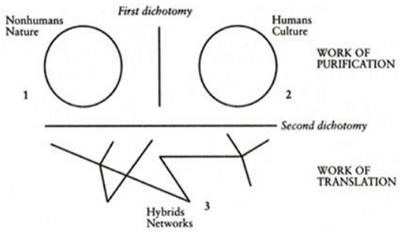
This study explores the advent of AI civilization and the need to redefine humanity in the face of rapid technological advancement. Tracing the evolution of digital technology from simple automation to intelligent agents capable of independent decision-making, it turns out that the rise of AI and humanoid robots blurs the line between humans and non-humans, challenging the long-standing human-nonhuman dichotomy rooted in Western philosophy. Based upon the examination of the shifts in ontology, from Cartesian dualism to monistic and relational perspectives, this study suggests that humans, living beings, and objects are evolving in a connected, co-dependent system. The emergence of cyborgs, AI, and bioengineering raises critical question about the identity of the humanity. With AI and enhanced humans gaining agency, traditional definition of humanity become obsolete and demand for an extended concept of the human in the post-AI era is growing.
  • 435 View
  • 15 Download
Machination: Semiotics of IArt. Dance and Artificial Intelligence
José María Paz Gago
EPISTÉMÈ 2025;33:3.   Published online March 31, 2025
DOI: https://doi.org/10.38119/cacs.2025.33.3

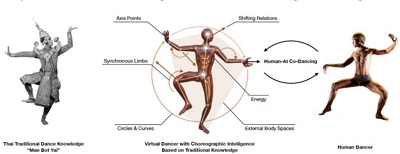
Multimodal generative Artificial Intelligence is an omnipresent technology in our post-industrial societies, as it has penetrated all areas of daily life, from social and commercial relations to the various fields of science and industry, communication, leisure and culture in general. This is to discuss whether AI is applicable to the field of artistic creation in general and to bodily arts such as dance in particular, taking into account emotional sensitivity and creativity, factors that are difficult to generate by a machine. In this article we will discuss examples of corporal artistic manifestations, in the domain of dance, in which corporality itself is called into question in the face of these interactions with humanized bodies conceived, created and “brought to life” by the magic of generative AI. The learning models developed by different Artificial Intelligence software allow these bodies to dance, model or evolve in scenographic spaces created ad hoc and shared to the point of replacing real dancers.

  • 870 View
  • 13 Download
The Aesthetics of Daily Spoken Language of Turkish
Züleyha Hande Akata
EPISTÉMÈ 2024;31:109-132.   Published online September 30, 2024
DOI: https://doi.org/10.38119/cacs.2024.31.6
Aesthetics has been the subject of different fields from the past to the present and has been evaluated through various approaches. There are different definitions of aesthetics, but the common aspect is its association with beauty and the senses. Despite its close relationship with fields such as philosophy and art history, everyday aesthetics has developed in a different direction from these fields today, focusing on the ordinary aspects of daily life. Everyday aesthetics reveals the aesthetic value of ordinary and commonplace phenomena. Daily spoken language is such a phenomenon. Before the emergence of everyday aesthetics, studies on aesthetics mostly focused on the literary aspects of language. For example, Turkish is one of the languages in which such studies exist. There are many studies aimed at revealing the aesthetic value of Turkish, whose earliest written products we have started to see since the 7th century. The main focus of these studies is on written language and literary works thought to reflect the aesthetic value of written language. Other studies on the aesthetic dimension of language have also concentrated on written language. However, the daily spoken language of Turkish has not been included in these aesthetic studies. One of the areas where the real richness of Turkish discourse and its aesthetic value are revealed is spoken language. This study aims to provide an opportunity to make inferences about the aesthetic value of the daily spoken language of Türkiye Turkish through the concept of everyday aesthetics. The sample of the study has consisted of the most frequently used formulaic expressions in daily language. The spoken language has been analyzed in terms of everyday aesthetics by considering the functions of these formulaic expressions. While analyzing the formulaic expressions, the evaluation criteria of everyday aesthetics have been taken into consideration, and efforts were made to reveal their aesthetic value based on their alignment with these criteria and their functions in daily life. This study highlights that aesthetics extends beyond the formal and literary domains of language. It illustrates that everyday language usage can also be associated with sub-fields of aesthetics based on various criteria, in addition to the more traditional areas such as formal and literary language. The primary objective of this study is to uncover the aesthetic value inherent in the Turkish spoken language, addressing a gap in this area, and to introduce the concept of everyday aesthetics to the Turkish academic literature within the realm of linguistic performance.
  • 251 View
  • 1 Download
Portrait of the Nurse: Kerime Salahor
Füsun Deniz Özden
EPISTÉMÈ 2024;31:83-108.   Published online September 30, 2024
DOI: https://doi.org/10.38119/cacs.2024.31.5
Women were peace-loving and avoided war unless necessary. Throughout history, women's roles in war have been based on serving in the background, such as nursing duties. In peace as in war, goodness and healing were provided through nurses. Florence Nightingale, who worked as a nurse during the Crimean War, is known for her contributions to the nursing profession and the institutionalization of the profession in the Ottoman Empire. Nurses contributed to patient care for Muslim Turkish soldiers, starting from the Balkan War in 1912, and during the Gallipoli War and World War I. Among these pioneer women was Kerime Salahor. Many portraits and busts of Kerime Salahor were made; The most striking among these is the portrait made by Feyhaman Duran. It reflects his female sensibility of the artist, who carries the spirit of Art Nouveau as well as his impressionist palette. Nazli Ecevit also made a portrait of Kerime Salahor. Sculptors Yervant Osgan and Ihsan Özsoy made a bust of Kerime Salahor. We can also trace the history of Turkish Nursing based on Kerime Salahor's painting and bust. This gradually turns into an effort to understand what women do and experience regarding healing and care, not only in Turkey, but also in the rings of the chain of human history, starting from the earliest times of history via Peircian semiotics. In this article, we evaluate portraits and busts of Kerime Salahor, a symbol of women providing care in wartime in the context of history of nursing, gender, and portraiture.
  • 289 View
  • 1 Download
TOP