Generative AI confronts semiotics with a new kind of sign-producing machine that actively reshapes the production and interpretation of visual content. Addressing the lack of humanities-based transdisciplinary research on this transformation, this study aims to establish a methodological foundation for the semiotic analysis of multimodal AI. By combining visual, social, quantitative, and multimodal semiotics, the paper proposes an integrated micro–meso–macro framework for evaluating AI-generated images. The analysis moves from the micro-level examination of plastic features and text-to-image translation, through the meso-level of enunciation, narrativity, and causality, to the macro-level of social stereotypes, ideology, creativity, rhetoric, truth, and inference. This is supported by a case study on lonely death and a semiotic explanation of latent space.
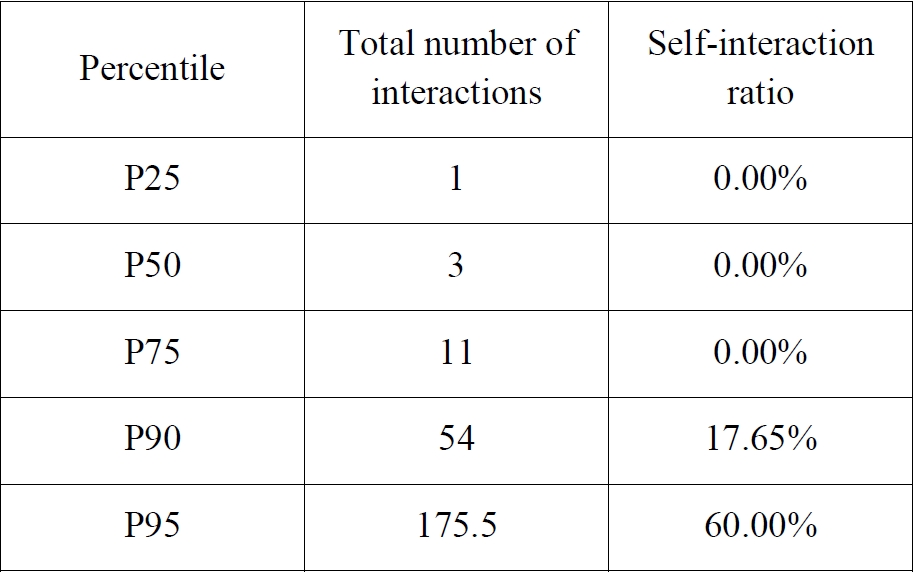
Our study proposes a socio-relational approach intended to inform the training of an artificial intelligence system for botnet detection. First, a corpus of accounts likely to be automated was assembled using individual criteria defined by the Beelzebot team (Brachotte et al.). These accounts were then analysed through their interaction dynamics in order to identify relational configurations that could serve as relevant signals for automated detection. The article presents a socio-relational analysis based on a three-step protocol: (1) identifying forms of self-interaction; (2) examining internal interactions among suspected accounts; and (3) analysing their external interactions with third-party actors. Conducted within the framework of the ANR Beelzebot project, which aims to develop the first French-language solution capable of detecting information manipulation strategies deployed by automated networks in the French-speaking X-sphere, this research constitutes an exploratory phase designed to calibrate the data-preparation methodologies required for training an AI model that integrates socio-relational indicators. In addition to producing a quantitative score, our model aims to provide a complementary qualitative output that offers insight into the characteristics of the botnet and the functional roles occupied by different bot profiles within the network. From an ethical standpoint, this approach contributes to the development of a more explainable AI model.
Road safety in Cameroon remains a major concern, with thousands of deaths and significant economic losses recorded annually. Traditional road communication strategies have shown limited effectiveness, revealing a gap between the messages disseminated and their appropriation by road users. In this context, artificial intelligence (AI) emerges as a strategic resource to rethink prevention and traffic regulation. Intelligent Transport Systems (ITS) and digital tools such as navigation applications, smart sensors, and connected vehicles provide new opportunities for interactive, predictive, and adaptive communication. The study adopts an empirico-inductive methodology based on observation, documentary analysis, and international comparison. The theoretical framework combines Shannon and Weaver’s mathematical theory of communication, Habermas’s theory of communicative action, Crozier and Friedberg’s sociology of regulation, and ITS approaches. The analysis highlights both media and non-media strategies, while demonstrating the concrete contributions of AI to traffic fluidity, accident reduction, and road governance. It concludes with the challenges and prospects of implementing intelligent road communication adapted to the Cameroonian context.
In 1981, Jean Baudrillard described the entry into the era of hyperreality: the image no longer represents reality, it precedes and produces it. Forty years later, generative artificial intelligence fulfills and surpasses this prophecy. Hyperreality is no longer merely a collective condition imposed by mass media—it becomes a personal device: everyone can now instantly produce their own simulacrum. This text analyzes three anthropological mutations provoked by this democratization. Ontology becomes reversible: AI authentically performs the human (Flynn, an artificial student in Vienna) while humans are suspected of being machines (the NPC effect). Emotion becomes an interface: empathetic chatbots shape what we accept to call "listening," and humans externalize the formatting of their emotions to algorithms. Existence becomes optional: fake-lives (starter packs, Strava Jockeys, fake Chinese offices) industrialize identity performance while feeding the surveillance capitalism theorized by Shoshana Zuboff. The article finally explores the ultimate inversion: we no longer merely simulate reality, we actively transform it to match the figurative. Cities Disneyland themselves for Instagram, bodies are surgically modified to resemble digital filters. The territory becomes the map.
This essay proposes “newtro-punk” as a framework for understanding the Korean science fiction film Space Sweepers (2021) and its intervention into speculative fiction’s colonial genealogy. Newtro (Nyut’ŭro), a portmanteau of “new” and “retro,” focuses not nostalgic recreation but critical reinterpretation of past aesthetic forms to recuperate the visual vocabulary of colonial modernity and developmental hardship. Where silkpunk recovers precolonial material cultures, newtro-punk engages the traumatic textures of modernity itself, transforming worn surfaces produced under colonial extraction into speculative resources. Through analysis of the film’s remediation and citational practice, linguistic reappropriation, characterization of marginal subjectivity, and typographic aesthetics, this essay demonstrates how Space Sweepers enacts epistemic reappropriation by way of aesthetics, contesting established frameworks regarding what counts as properly futuristic through strategies that enact alternative valuations rather than merely arguing for them. The newtro-punk wager positions worn textures and vernacular particularity as legitimate materials for imagining futurity, demonstrating that futures imagined from positions of precarity possess validity equal to those imagined from positions of power.
This article examines fake news, rumors, and truths – an entire heavy machinery of all-pervasive information – for which we propose the label capharnaüm to denote informational disorder. Reality is a composite and partial construct, shaped by the ways in which representations are produced and articulated: through techniques and technologies, but also through the intentions, strategies, and imagination of the actors of a given era. Such is the case with É mile Zola who, in Au Bonheur des Dames, offers an astonishingly visionary perspective on the world of advertising and the media, on the war of images and imaginaries – phenomena one might consider contemporary, yet whose origins go back as far as the Epic of Gilgamesh. The affinity with a certain dramatic mode of narration – here, the opening of the great department stores and the purchasing frenzy into which Zola’s female characters are drawn through exceptional sales and the flattering of their egos – transcends facts and figures. It opens a reflective window onto our own portraits, whether as reasonable buyers or as consumers of any product that enhances our self-image and, why not, as consumers of fine nineteenth-century literature.
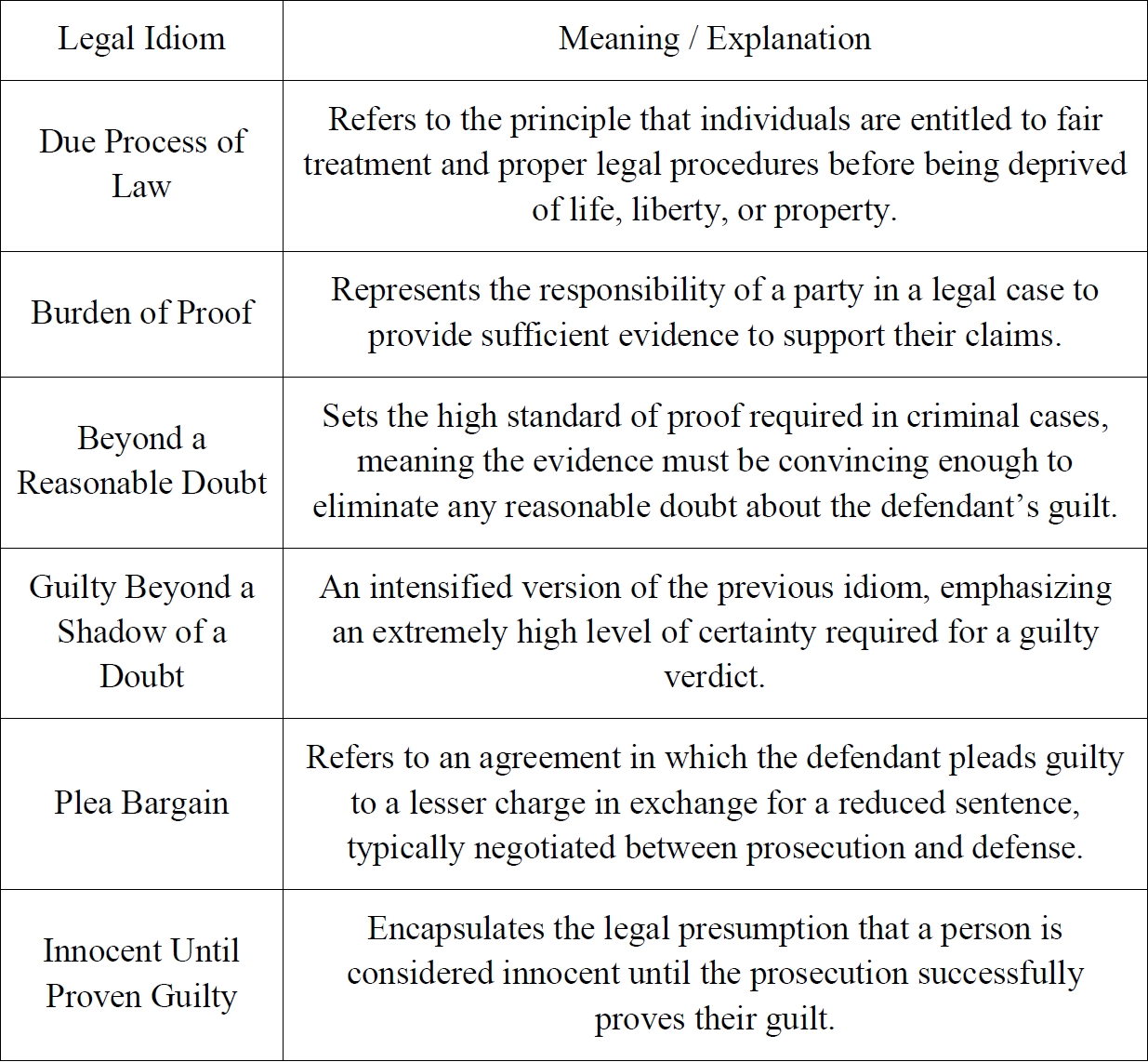
The present paper aims at analyzing the so-called legal phrases, sometimes called collocations, expressions, or even idioms, which constitute one of the numerous terminological difficulties of legalese, and often prove challenging to learners of English as a second language. Definable as a subtype of multi-word units, or phraseological combinations with various forms, they possess a specific semantic content and pragmatic function, which make them resist decoding and radically diverge from “plain” language, thus giving rise to innumerable comprehension and interpretation problems. Additional features such as the complex use of metonymy and euphemism streamline complex legal processes and manage the emotional and social impact of legal discourse, while strategic adaptations of Grice’s maxims support consistency and interpretive stability. Together, these elements demonstrate that legalese functions not merely as technical jargon but as an essential tool for structuring legal reasoning and administering justice.




 First
First Prev
Prev